

How To Take Your Flathead Valley Garage From Freezing to Functional
Winters in Montana’s Flathead Valley are no joke, with temperatures often dipping below zero and snow piling up, an unheated garage can quickly turn into an icebox. Whether you use your garage as a DIY workshop, a home gym, or simply to protect vehicles and tools from the cold, finding an efficient way to heat that space is the goal. Traditional fixes like portable space heaters or extending your home’s ductwork often fall short in either power or practicality. Instead, modern solutions offer flexible installation, high energy efficiency, low maintenance, and even year-round climate control to keep your garage comfortable in any season. In this post, the home comfort specialists at Central Heating Cooling Plumbing Electrical explore the top heating options, from ultra-efficient ductless heat pumps to rugged unit heaters that can transform your garage from freezing to fully functional.
For most Flathead Valley garages, the best options are a ductless mini-split heat pump, which heats and cools, or a ceiling-mounted gas or electric unit heater, which heats only. Whichever you choose, insulate and seal the garage first.
| Option | Heats | Cools | Best for |
|---|---|---|---|
| Ductless mini-split heat pump | Yes | Yes | Year-round workshops and gyms |
| Gas unit heater | Yes | No | Large garages that need fast, strong heat |
| Electric unit heater | Yes | No | Smaller or occasionally used garages |
| Wall-mounted heat pump | Yes | Yes | Spaces with no room for an outdoor unit |
Ductless Mini-Split Heat Pump Systems
Ductless mini-split systems are widely considered one of the best ways to heat (and cool) a garage or workshop. They consist of an outdoor compressor unit and one or more indoor air handlers mounted high on the wall, linked by a small conduit, no bulky ductwork needed. Mini-splits operate as heat pumps, transferring heat from outside air instead of generating it, which makes them extremely energy-efficient compared to electric space heaters or traditional furnaces. Cold-climate models are built for Montana winters. Central Heating Cooling Plumbing Electrical installs Mitsubishi ductless systems, and Mitsubishi’s Hyper-Heating INVERTER (H2i) models deliver heat in outdoor temperatures as low as -13°F, with up to 100% of their heating capacity at 5°F. This technology advancement means a properly sized mini-split will keep your garage cozy during January blizzards and, come summer, switch to cooling mode to serve as an air conditioner, all in one system.
Benefits: Mini-splits offer year-round climate control, quietly delivering both heat and AC for 4-season use. They’re typically mounted up and out of the way, preserving floor space, and their whisper-quiet operation won’t drown out your project or relaxation time. You can precisely set the temperature via remote or smart thermostat, avoiding the on-off cycling and cold spots of less sophisticated heaters. Modern inverter-driven compressors modulate to maintain steady heat output without big spikes in energy use. Over time, that efficiency can lower your utility bills. And when the garage isn’t in use, you can simply turn the unit off or down to save energy, since it’s a dedicated system separate from your home’s HVAC.
Considerations: The main downsides are higher upfront cost and installation complexity. A quality mini-split unit (plus professional installation) will cost more than a basic garage heater. However, many homeowners find the investment worth it for the comfort and savings; you may also recoup some cost via energy efficiency rebates. If your garage is a woodworking or auto shop that produces a lot of dust, you’ll need to clean the mini-split’s filters periodically (a simple task) to keep it running optimally. Overall, if you’re seeking a high-efficiency, low-maintenance solution to keep your garage toasty in winter and cool in summer, a ductless mini-split heat pump is hard to beat.
Ceiling-Mounted Unit Heaters (Gas or Electric)
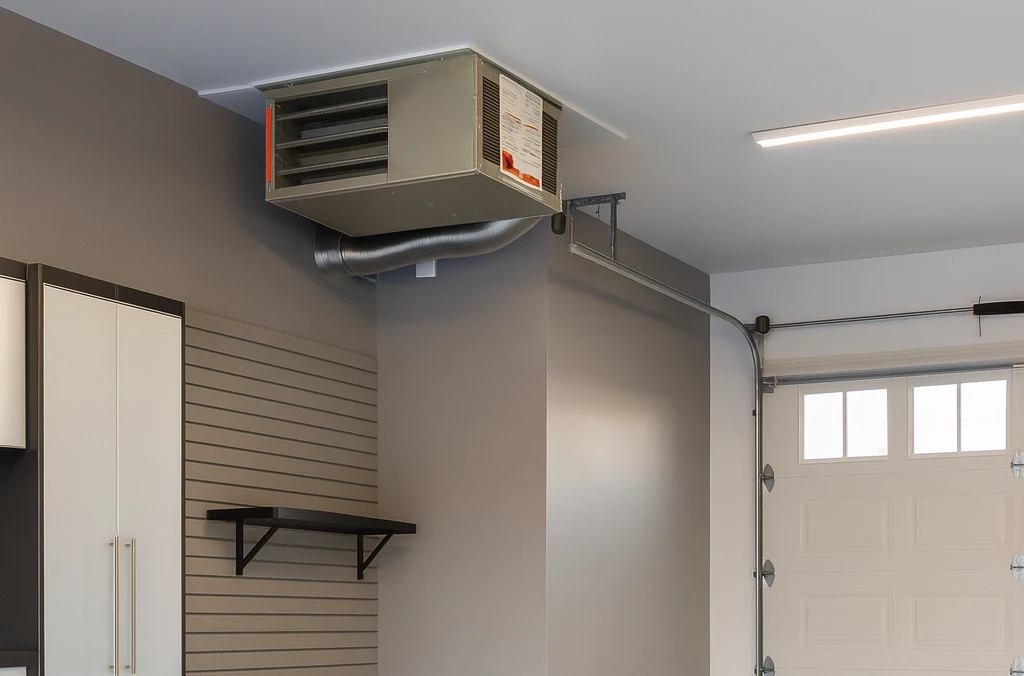
When it comes to raw heating muscle and simplicity, it’s tough to beat a ceiling-mounted unit heater. These self-contained heaters are mounted on the ceiling or high on a wall and blast warm air across the garage, quickly raising the temperature. Gas unit heaters, fueled by natural gas or propane, are a popular choice in cold climates like Montana. They deliver a lot of BTUs and can heat large garages or workshops faster and more evenly than most portable electric heaters. Garage unit heaters are heavy-duty, built to withstand dusty or grimy environments, and use power venting to exhaust combustion fumes safely outside. Because natural gas is often cheaper per BTU than electricity, operating costs are lower than for electric heaters of similar output. Once installed and connected to a gas line, they require minimal upkeep, just an annual check or the occasional cleaning, while reliably cranking out heat whenever you need it.
Electric unit heaters are another ceiling-mounted option. Instead of burning fuel, they use heating elements and a fan to push warm air around. Electric models are easier to install in most cases since there’s no flue or gas hookup, you just need the appropriate 240 V electrical circuit and mounting hardware. They’re a great choice for smaller garages, or in situations where gas is not available. Electric units provide clean, fume-free heat and are virtually maintenance-free (aside from clearing dust from the intake). Do note that electricity is usually the more expensive way to produce heat; running a 5,000 W or 10,000 W garage heater can noticeably bump up your power bill during heavy use. For this reason, electric unit heaters are best for occasional or supplemental heating, or for well-insulated one- to two-car garages where a smaller unit can maintain comfortable temperatures. On the upside, they’re safe to use indoors (no carbon monoxide concerns) and often come with built-in thermostats and remote controls for convenient operation.
Considerations for Unit Heaters: Whether gas or electric, ceiling-mounted heaters are relatively low-maintenance, set-and-forget solutions. Gas models do require proper venting of exhaust gases (often through a side wall or roof vent pipe) and should be installed by a professional for safety. Follow the manufacturer’s clearance and mounting-height requirements, especially where you store paints, solvents or fuel. Electric models need a dedicated high-amperage circuit; hiring an electrician may be wise unless you’re comfortable with wiring. Keep in mind that unit heaters only provide heating, there’s no cooling or dehumidification in summer, so you might need a separate cooling plan if your garage gets hot in July. Lastly, consider the space trade-off: a ceiling heater will occupy some overhead room and may blow directly on objects below, which could be an issue if you’re tight on storage space or have sensitive items. Overall, for garages that primarily need serious warmth in winter, a ceiling-mounted unit heater (especially gas-fired for larger spaces) is a proven, cost-effective choice that can make a freezing workshop comfortable within minutes of firing up.
Energy-Efficient Wall-Mounted Heat Pumps
Wall-mounted heat pumps offer another innovative solution for heating a garage or workshop. This category refers to compact, self-contained heat pump units that mount through an exterior wall. They function much like a mini-split, using refrigeration technology to extract heat from outside air, but unlike traditional two-piece mini-splits, wall-mounted heat pump units house all components in one appliance. Often marketed as “through-the-wall heat pumps” or packaged terminal heat pumps (when they include cooling), these systems are essentially the permanent, built-in version of a window heat pump AC. Homeowners choose wall-mounted heat pumps when a standard mini-split’s outdoor unit isn’t feasible or desired. For example, in a small workshop or hobby studio attached to the house, you might not have a good spot on the ground or an exterior wall for a condenser, a through-wall unit neatly solves that by fitting entirely in the wall sleeve.
Today’s wall-mounted heat pump units are quite efficient and offer both heating and cooling like their ductless cousins. They come in sizes suited to one-room spaces like garages. Installation is more involved than a mini-split. You’ll need to cut a large opening in the wall and secure the unit, but there’s no refrigerant piping to run and often these units plug into a 230 V outlet. One key consideration is that through-wall heat pumps typically have electric resistance heaters as backup. In mild cold (above freezing), the heat pump handles the job efficiently; but as outdoor temps drop very low, they may automatically kick over to resistance heat, which is less efficient (similar to a space heater running). For the coldest stretches of Flathead winters, this means higher electricity usage compared to a true cold-climate mini-split. Additionally, expect a bit more noise with a monoblock wall unit. Both the compressor and blower are in the garage with you, so it’s akin to the sound level of a window AC or PTAC unit. If moderate noise and a bit of lost wall space aren’t deal-breakers, a wall-mounted heat pump can be a convenient all-in-one solution to keep a garage workshop comfortable through winter freezes and summer heatwaves.
Don’t Forget Insulation and Sealing
Even the best heater will struggle in a drafty, uninsulated garage. Before winter cold sets in, it pays to insulate and air-seal your garage space as much as possible. Adding insulation batts or panels to the garage walls and ceiling will help trap the heat you’re paying for, instead of letting it escape outdoors. Likewise, an insulated garage door (or an insulation kit for your existing door) can dramatically cut down heat loss through that large surface. Insulating the garage not only makes it easier to maintain comfortable temperatures, it also reduces the burden on your heating system and saves energy. In a Flathead Valley winter, a well-insulated garage can make the difference between your heater cycling constantly or running more efficiently to keep you warm.
Seal up any gaps or cracks where cold air sneaks in. Common culprits are the garage door edges. Installing or replacing weatherstripping there can stop icy drafts. Check around windows, the door into the house, and any wall penetrations (like where pipes or cables enter) and caulk or foam them as needed. Even outlets on exterior walls can leak air; inexpensive foam gaskets under the cover plates can help. By tightening up the space and beefing up insulation, you’ll not only stay warmer, but also prevent problems like condensation, mold, or rust that can plague cold, damp garages. Every heating solution discussed here will perform better and more cost-effectively in an insulated garage environment. It’s truly a win-win: your heater runs less, and you get a cozier workshop.
Garage Heating FAQ
Can a mini-split heat a garage in a Montana winter?
Yes, with a cold-climate model. Mitsubishi’s Hyper-Heating INVERTER systems deliver heat down to -13°F outdoors.
Should I insulate my garage before adding heat?
Yes. Insulating the walls, ceiling and garage door, and sealing gaps around the door and wall openings, lets any heater work less and keep the space warmer.
Is a gas or electric unit heater cheaper to run?
Gas usually costs less to run, because natural gas is often cheaper than electricity for the same heat. Electric unit heaters cost less to install, since they need no gas line or vent.
Making Your Garage Winter-Ready Year-Round
In summary, turning a freezing garage into a comfortable, productive space comes down to choosing the right heating solution (and pairing it with proper insulation). For many homeowners, a ductless mini-split heat pump is a top choice, it’s ultra-efficient, provides both heat and AC for year-round use, and offers the convenience of precise temperature control. If your priority is rapid, robust heating, say for a large garage or hobby shop, a gas-fired ceiling unit heater might be the best fit, delivering garage-filling warmth on the coldest Montana mornings. Electric ceiling heaters serve well for smaller or intermittently used spaces where simplicity and safety are key. Whichever system you choose, don’t skimp on sealing and insulating your garage. It is the step that lets your new heater work effectively and efficiently. With a modern, well-chosen heater and a bit of weatherproofing, your garage or workshop will stay comfortable through bitter winters and beyond, truly transforming it from freezing to functional all year long.