

6 Warning Signs We See Every January
When temperatures plunge to -20°F in Kalispell, Whitefish, or Columbia Falls, your heating system works around the clock to keep your family comfortable. Unfortunately, this is also when we receive the most emergency calls from homeowners whose furnaces have given out at the worst possible moment.
After 34 years serving Flathead Valley homeowners, we’ve learned that most furnace failures don’t happen without warning. Your heating system typically sends distress signals well before it quits entirely. The challenge is recognizing these warning signs early enough to schedule repairs on your terms, not during a desperate midnight call when temperatures are dangerously low.
Here are the six warning signs our technicians see most frequently during January service calls, and what each one means for your home’s heating system.
1. Strange Noises Coming from Your Furnace
Your furnace shouldn’t sound like it’s struggling. While some operational noise is normal, new or unusual sounds often indicate mechanical problems that worsen over time. Pay attention to these specific sounds and what they typically mean.
Banging or popping noises when the furnace starts usually point to delayed ignition. When gas builds up before igniting, it creates a small explosion that stresses the heat exchanger. This is particularly common in older furnaces and can eventually lead to cracks in critical components.
Squealing or whining sounds often come from a worn blower belt or failing motor bearings. These components are relatively inexpensive to replace if caught early, but a seized blower motor costs significantly more.
Some sounds are normal: the burner igniting, air moving through the ducts, a low hum, and some popping or clicking while the furnace starts up. Grinding or scraping can mean worn bearings or other worn internal parts. Loud rumbling, a booming sound when the burners light, or repeated clicking also calls for an inspection.
Rattling noises may indicate loose panels, ductwork connections, or internal components that have worked loose from vibration over years of operation. While sometimes this is a simple fix, rattling can also signal more serious problems with the blower assembly or heat exchanger mounts.
Grinding or scraping sounds require immediate attention. This usually means metal is contacting metal somewhere in your system, often a blower wheel that has come loose or bearings that have completely failed. Continuing to run your furnace with this condition can cause extensive damage.
2. Rising Energy Bills Without Increased Usage
Have you noticed your heating costs climbing even though your thermostat settings haven’t changed? When furnaces lose efficiency, they run longer cycles to maintain the same temperature, consuming more fuel in the process. This is one of the earliest and most reliable indicators that something is wrong.
Several factors contribute to declining furnace efficiency. Dirty filters restrict airflow, forcing the blower motor to work harder. Worn burners don’t combust fuel as completely as they should. Aging heat exchangers transfer less warmth to the circulating air. A buildup of dust and debris on internal components acts like insulation, preventing proper heat transfer.
AFUE tells you how much of your fuel becomes heat. According to the U.S. Department of Energy, older, low-efficiency systems have AFUE ratings of 56% to 70%, and high-efficiency systems reach 90% to 98.5%. Even well-maintained furnaces gradually lose efficiency as components wear.
3. Uneven Heating Throughout Your Home
Do some rooms in your home feel comfortable while others remain stubbornly cold? This inconsistent heating often indicates your furnace can no longer distribute warmth effectively. The problem becomes especially noticeable during deep cold snaps when the system struggles to keep up with demand.
A failing blower motor is one common cause. As the motor weakens, it can’t push air through your entire duct system with enough force to reach distant rooms. You might notice that rooms closest to the furnace stay warm while bedrooms at the end of duct runs feel cold.
Heat exchanger problems can also create uneven heating. Cracks or corrosion in the heat exchanger reduce the amount of warmth transferred to the circulating air. This is a serious safety concern as well, a cracked heat exchanger can leak carbon monoxide into your home’s air supply.
Ductwork issues sometimes masquerade as furnace problems. Leaks, disconnections, or collapsed sections in your ducts can prevent heated air from reaching certain areas. However, if your ductwork hasn’t changed and you’re suddenly experiencing uneven heating, the furnace itself is the more likely culprit.
A furnace that barely kept up during moderate winters may fail entirely during extended cold periods. If your furnace was adequate when installed but your home has been remodeled or additions built, it may simply lack the capacity to heat the expanded space.
4. Frequent Cycling On and Off
Short cycling, when your furnace repeatedly starts and stops rather than running through complete heating cycles, puts enormous stress on your system. Each startup draws significant electricity to ignite the burners and bring the blower up to speed. A furnace that short cycles can age prematurely and may fail years before its expected lifespan.
The most common cause of short cycling is a clogged air filter. When the filter becomes too dirty to allow adequate airflow, the furnace overheats and triggers a safety shutdown. After cooling briefly, it restarts, overheats again, and shuts down. This cycle repeats indefinitely, wearing out components while never actually warming your home properly.
Thermostat problems also cause short cycling. If the thermostat is located near a heat source, in direct sunlight, or in a drafty area, it may sense incorrect temperatures and signal the furnace inappropriately. A malfunctioning thermostat sensor can produce the same effect.
More concerning causes include a failing flame sensor or a heat exchanger that’s overheating due to airflow restrictions or component failure. If changing your filter doesn’t resolve short cycling, professional diagnosis is essential. Continuing to run a short-cycling furnace risks more serious damage and potential safety hazards.
5. Visible Signs of Wear, Rust, or Cracks
Physical deterioration of your furnace is easy to overlook since most homeowners rarely examine their heating equipment closely. However, visible wear often precedes mechanical failure, and some types of damage create immediate safety concerns.
Rust on the furnace cabinet, pipes, or venting system indicates moisture problems. Furnaces produce water vapor as a byproduct of combustion, and properly functioning systems vent this moisture outdoors. When rust appears, it suggests the venting system isn’t working correctly or condensation is forming where it shouldn’t. Excessive moisture accelerates corrosion throughout the system and can damage the heat exchanger.
Cracks anywhere on the furnace deserve immediate attention. Hairline cracks in the heat exchanger allow combustion gases, including carbon monoxide, to mix with your home’s air supply. Heat exchanger replacement is a major repair, so on an older furnace, replacing the furnace is often the more practical choice.
Soot accumulation around the furnace, registers, or vent connections signals combustion problems. Soot consists of unburned carbon particles that form when fuel doesn’t burn completely. In addition to indicating inefficient operation, soot can clog burners and heat exchangers, further reducing performance.
Water pooling around your furnace base may indicate a condensate drain problem in high-efficiency models, or it could signal a heat exchanger crack or humidifier malfunction. Any unexplained moisture near your furnace warrants professional inspection.
6. Your Furnace Is More Than 15 Years Old
Age alone doesn’t determine when a furnace needs replacement, but it does increase the likelihood of problems. The DOE’s home heating guide gives a furnace a typical life of 15 to 30 years, and ENERGY STAR suggests considering a replacement once a furnace is more than 15 years old. Neglected systems may fail sooner.
In Montana’s climate, furnaces work harder than in milder regions. Our extended heating season and extreme cold snaps mean your furnace logs more operating hours each year than a similar unit in a warmer climate. This additional workload accelerates wear on all components.
As furnaces age, replacement parts become harder to find. An aging furnace may require increasingly expensive repairs as technicians source obsolete components or fabricate workarounds.
Efficiency also declines with age. Even well-maintained furnaces experience gradual performance degradation as heat exchangers scale up, blower motors weaken, and burner assemblies wear.
If your furnace is more than 15 years old, begin planning for replacement even if it’s currently working. Understanding your options before an emergency lets you choose the right system, schedule installation at your convenience, and take advantage of any available rebates or financing offers. Waiting until the system fails completely often means accepting whatever equipment is immediately available and paying premium prices for emergency installation.
No Heat? Check These First
- Thermostat. Make sure it is set to Heat, the setpoint is above room temperature, and the batteries are good. A power outage or a recent switch from cooling can leave it on the wrong setting.
- Power. Check that the furnace service switch is on and that its breaker has not tripped.
- Access panel. The furnace will not run if the panel over the blower is not fully closed. This is a safety feature.
- Filter. A clogged filter restricts airflow and makes the furnace work harder.
- Pilot light, on older furnaces. If it has gone out once, it is generally safe to relight it by following the owner’s manual. If it will not stay lit, call for service.
If the furnace runs but no air comes out of the vents, the blower belt may be broken. Dirty burners and any mechanical noise should be handled by a technician.
What to Do If You Notice These Warning Signs
Recognizing a problem is only the first step. Taking appropriate action can mean the difference between a minor repair and a major replacement, or between a comfortable home and a dangerous one.
For unusual noises, rising energy bills, uneven heating, or short cycling, schedule a professional inspection promptly. These issues rarely resolve themselves and typically worsen over time. Early diagnosis often allows repairs that extend your furnace’s life for several more years.
For yellow flames, gas odors, carbon monoxide detector alarms, or any safety concern, turn off your furnace immediately. If you smell gas, evacuate your home and call your gas utility from outside. Carbon monoxide detector alarms warrant similar caution: leave the house first, then call for help.
For aging furnaces showing multiple warning signs, consider a comprehensive evaluation. A qualified technician can assess your system’s remaining lifespan, identify any safety concerns, and help you weigh repair costs against replacement benefits. This evaluation provides the information you need to make a sound decision.
The Value of Preventive Maintenance
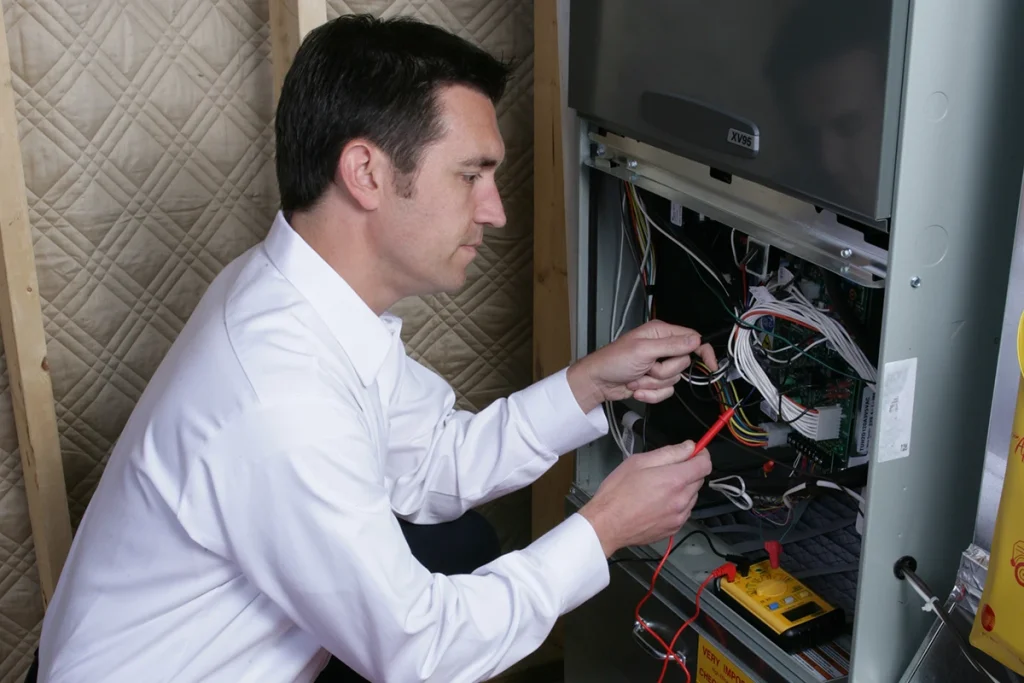
Many furnace failures we see in January could have been prevented with fall maintenance. Annual professional inspections catch small problems before they become emergencies. Technicians clean burners, check electrical connections, verify proper combustion, inspect heat exchangers, and ensure all safety systems function correctly.
Our Comfort Care Plan members receive priority scheduling when problems arise, a significant advantage when temperatures drop and our phones ring constantly. They also receive two system checks annually, helping catch issues before the heating season begins and after it ends.
Between professional visits, homeowners can help their furnaces run reliably by checking the air filter every month and cleaning or replacing it when it is dirty. Keep the area around your furnace clear of storage and debris. Ensure all vents and returns remain unobstructed by furniture or rugs. These simple steps reduce strain on your system and help prevent the conditions that lead to failure.
When Replacement Makes More Sense Than Repair
Not every furnace problem justifies repair. If your furnace requires multiple repairs within a short period, the cumulative costs often exceed what you’d pay for new equipment.
New furnaces offer substantially better efficiency than models manufactured even 15 years ago. High-efficiency condensing furnaces reach AFUE ratings of 90% to 98.5%, capturing heat that older models sent up the chimney.
Modern furnaces also offer features that improve comfort and convenience. Variable-speed blowers provide more consistent temperatures and quieter operation. Two-stage and modulating burners adjust output to match heating demand, eliminating the temperature swings common with older single-stage equipment. Smart thermostat compatibility allows remote monitoring and control.
As a Rheem Premier Dealer, we offer some of the industry’s most efficient and reliable heating equipment. Our technicians receive factory training to install and service these systems correctly, and Rheem backs their products with comprehensive warranty coverage.
Don’t Wait for the Emergency
January is the worst time to discover your furnace has failed. Emergency calls during cold snaps mean longer wait times, premium service charges, and limited equipment choices. You may face days without heat while parts are ordered or find yourself accepting a furnace that wasn’t your first choice simply because it’s available immediately.
If your furnace is showing any of the warning signs described above, contact us to schedule an inspection. Our technicians can diagnose the problem, explain your options, and help you make an informed decision, all before you’re facing a heating emergency.
Central Heating Cooling Plumbing Electrical has served Kalispell, Whitefish, Columbia Falls, Bigfork, Polson, Lakeside, Somers, and the entire Flathead Valley for 34 years. We’ve built our reputation on honest assessments, quality workmanship, and standing behind our service. When your furnace shows signs of trouble, we’re the one call you need to make.
Schedule your furnace inspection today by calling (406) 756-6656 or request service online.