

You notice hot water only when it runs out. The shower turns cold mid-rinse. The dishwasher and washing machine fight over the same supply. An older tank takes up floor space and still falls behind your household.
A tankless water heater heats water as you use it, so there is no tank to drain and refill. If you’re planning to replace your water heater, going tankless can be one of the strongest upgrades for comfort and efficiency. For homes in Kalispell, Whitefish, Columbia Falls, Bigfork, Polson, Lakeside, Somers, and across the Flathead Valley, that means steadier hot water, less wasted energy, and a system sized to how your family lives.
Why Flathead Valley Homeowners Choose Tankless
Tankless systems solve the hot water problems that show up in busy Montana homes: back-to-back showers, frequent guests, large soaking tubs, and vacation properties that sit idle between visits. A right-sized unit delivers steady hot water for showers, laundry, and dishes without waiting on a tank to reheat. Tankless makes even more sense if your current heater is aging, undersized, leaking, or falling behind.
1. Endless Hot Water on Demand
A tank stores a set number of gallons. Once you use them, the system needs time to recover. A tankless unit heats water as it flows through, so it keeps up when people shower one after another or several fixtures run at once.
Sizing decides the result. Montana’s cold incoming groundwater lowers how many gallons per minute a unit can heat, so a professional should review your hot water demand, plumbing layout, fuel source, and venting before you pick a model.
2. Lower Energy Use
A tank reheats stored water all day, even when no one uses it. A tankless system skips that standby loss and heats only on demand. According to the U.S. Department of Energy, demand-type water heaters run 24% to 34% more efficient than storage tanks for homes using 41 gallons or less per day, and 8% to 14% more efficient for homes using around 86 gallons. Your savings track household size, water use, fuel costs, and installation.
3. Long-Term Value and a Longer Lifespan
A tankless heater costs more upfront, but it earns that back through lower energy use and a longer service life. With correct installation and routine flushing, a tankless unit often outlasts a tank-style model. Because it stores no water, it also avoids the rust, sediment, and stale water that build up inside aging tanks.
Maintenance still matters, above all with hard water, where minerals leave scale inside the heat exchanger. A water softener or water treatment system can protect the unit and hold its performance over time. Qualifying high-efficiency models may also earn energy incentives or tax credits, so check current eligibility before you decide.
4. Space Savings
A storage tank claims floor space in a closet, basement, garage, or utility room. A tankless unit mounts on the wall and frees that footprint, which helps in smaller homes, remodels, cabins, and condos. Location still shapes the install: gas models need proper venting, combustion air, gas line capacity, and a condensate drain on condensing units, while electric models may call for an electrical upgrade. Central reviews those details for a safe install.
5. Everyday Comfort for Busy Households
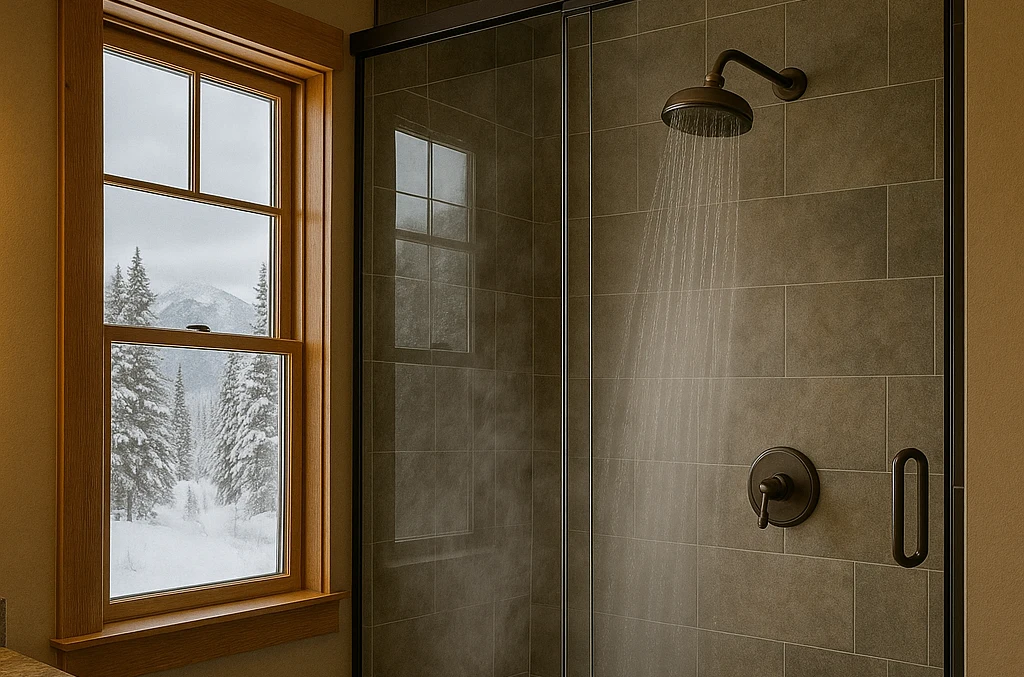
Homeowners talk about savings, but the comfort often wins them over. You can run a shower right after the dishwasher. Guests can stay over without anyone rationing hot water. A deep tub fills without a cold surprise. For large families, multigenerational homes, and frequent hosts, that steadier supply changes the daily routine.
6. A Smart Fit for New Homes, Remodels, and Replacements
Tankless works well for new construction, major remodels, and straight replacements. If you’re already updating plumbing, finishing a basement, or adding a high-use fixture, it’s a good moment to go tankless. During planning, Central reviews the details that decide performance:
- Household size and peak hot water demand
- Number of bathrooms and major fixtures
- Incoming water temperature
- Natural gas, propane, or electric availability
- Gas line capacity and venting requirements
- Electrical panel capacity, when applicable
- Water quality and scale prevention
- Recirculation for faster hot water delivery
- Install location and future service access
Is a Tankless Water Heater Right for Every Home?
Some homes need another approach. A high-demand household may need a larger unit, a second unit, or a designed multi-unit system, and some homes need gas, venting, or electrical updates first. For a few, a high-efficiency tank remains the better call. The right answer tracks your budget, water use, home layout, fuel source, and how long you plan to stay. Central Heating Cooling Plumbing Electrical lays out the options without pressure so you can choose with confidence.
Tankless Water Heater Installation in Kalispell and the Flathead Valley
For 34 years, Central Heating Cooling Plumbing Electrical has helped Flathead Valley homeowners make smart decisions about comfort, safety, and efficiency. As a full-service local team, Central looks past the water heater itself to the plumbing, gas, electrical, and venting details that decide the finished result. A good tankless upgrade takes correct sizing, safe installation, and a clear read on how your household uses hot water.
Make One Call for Your Hot Water Upgrade
If your water heater runs out early, recovers slowly, makes noise, leaks, or nears the end of its life, now is the time to weigh your options. Central installs and services water heaters across Kalispell, Whitefish, Columbia Falls, Bigfork, Polson, Lakeside, Somers, and the surrounding Flathead Valley. Contact Central today to schedule service or request a tankless water heater installation estimate.